

Local Water Done Well


Why did Council have to consider different options?
Under Local Water Done Well, all councils were required to assess how they will deliver water services in the future and prepare a Water Services Delivery Plan demonstrating how they will meet future regulatory, infrastructure and financial sustainability requirements.
How was iwi and mana whenua involved?
Throughout the Local Water Done Well project, engagement occurred through governance groups, technical working groups, iwi chair forums and the public consultation process. Feedback helped inform development of the service delivery options considered by Council.
Why can't Council simply continue doing what it does today?
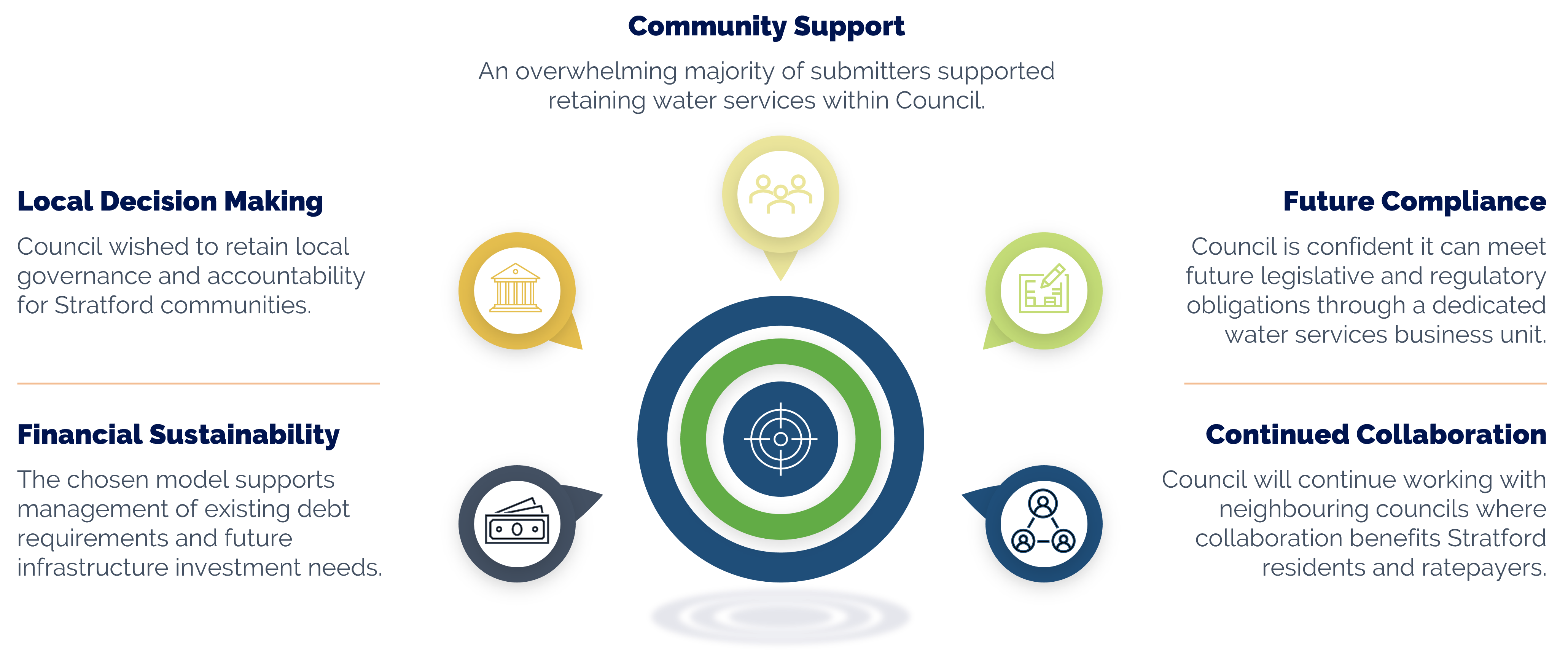
The Government's Local Water Done Well reforms require all councils to demonstrate how water services will remain compliant, financially sustainable and capable of meeting future regulatory requirements. As a result, councils cannot simply maintain the status quo and were required to consider future delivery arrangements through a Water Services Delivery Plan.
What is a Water Services Delivery Plan?
This was required under the Local Government (Water Services Preliminary Arrangements) Act 2024.
The Water Services Delivery Plan required Council to demonstrate that waters services is financially sustainable, how waters services will be delivered under the Local Water Done Well framework, and a plan to make this happen.
It was approved by Council resolution on 26 August 2025, submitted to the Department of Internal Affairs on 29 August 2025, and approved by the Secretary for Local Government on 28 October 2025.
What does financially sustainable and ringfenced water services mean?
This was one of the criteria that the Department of Internal Affairs assessed Council on in the Water Services Delivery Plan.
Local Water Done Well requires financial sustainability to avoid history repeating itself with a lack of investment in waters infrastructure that we have seen across Aotearoa New Zealand.
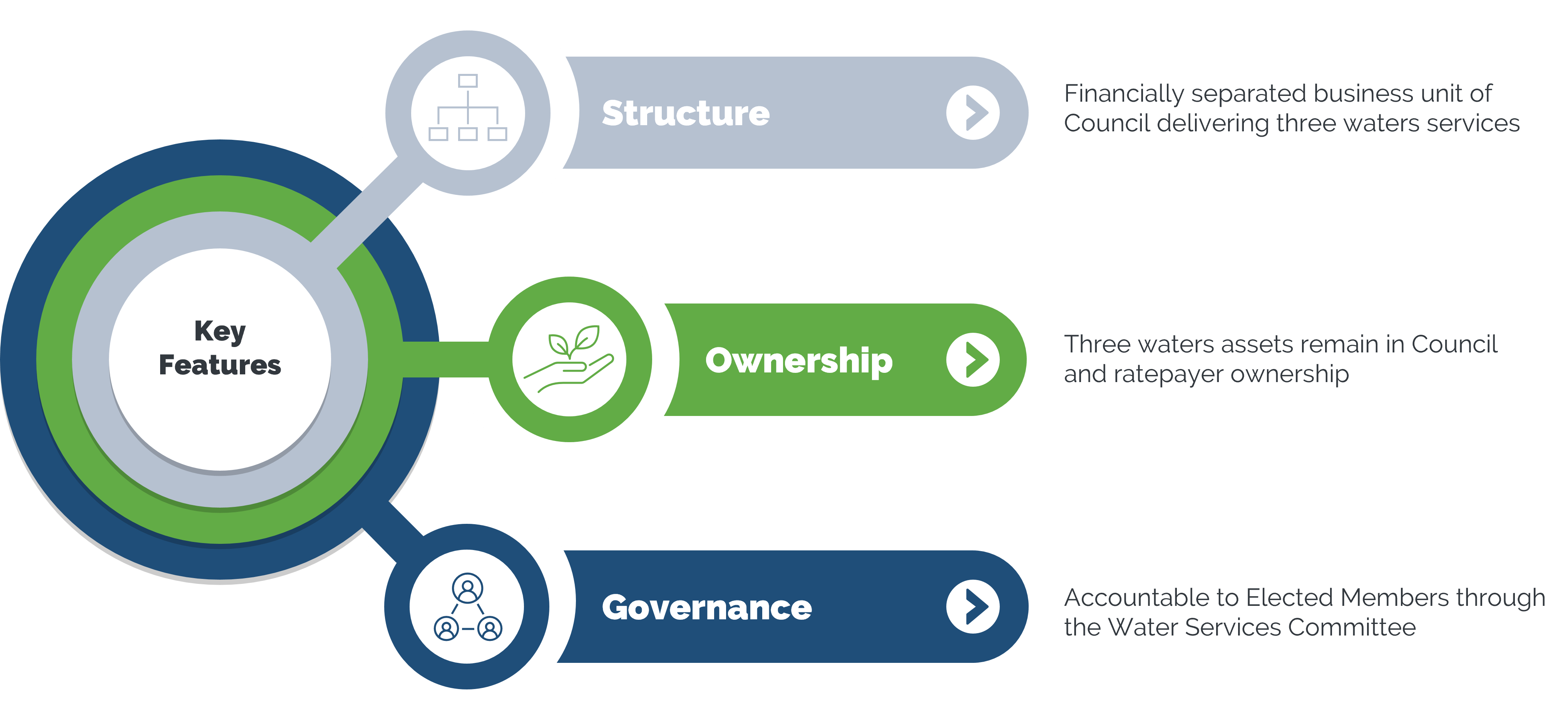
There are three statutory tests that the SWIBU will be required to meet in order to demonstrate that water services are financially sustainable:
- Revenue sufficiency: is SWIBU collecting enough revenue to cover the debt and costs of water services delivery?
- Investment sufficiency: is SWIBU planning to invest enough to meet levels of service, regulatory requirements and provide for growth?
- Financing sufficiency: is the funding and finance arrangements SWIBU has in place enough to meet the planned investment requirements?
Financial ringfencing ensures that all revenue collected by Council (through SWIBU) is reinvested back into waters services and not into other services that Council delivers.
Council has not historically had the issues that these requirements are trying to avoid so this does not change how Council conducts business. The key change in the background is to meet the planning and reporting requirements and to separate the books in our systems.

